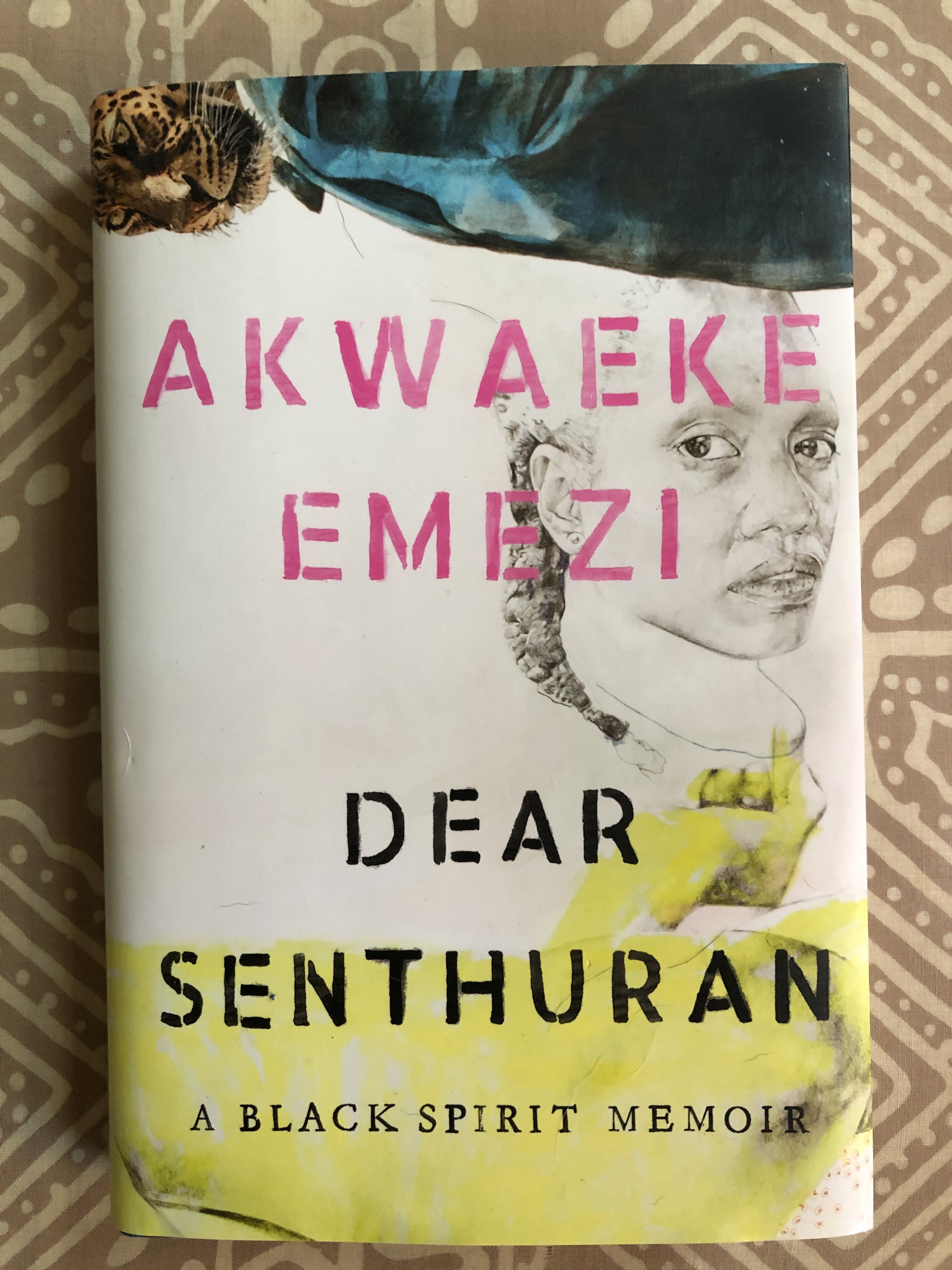
I am reading Lois McMaster Bujold's Shards of Honor as a favor for a friend, and I still have Ursula K. LeGuin's Lathe of Heaven on the go ( for those following along, that means War and Peace is neglected for the moment, though I made it as far as the wolf-hunting part, which is roughly half way).
Anyway, Bujold writes "Radial symmetry was popular among the tiny creatures occupying the ecological niches held by insects on Earth" (17) and "Do you think they could be like those birds from Earth, that pick parasites off cattle?" (21).
LeGuin writes about Dr. William Haber's office in Portland: "It did not have a view of Mount Hood [. . .] But on one of the walls was a big photographic mural of Mount Hood" (6). It is the absence of this mural that first signals the world-changing effect of Orr's dreams (24-5).
These two incidents of the unfamiliar fantastic and scientific compared to Earth (radials, Mount Hood) together made me think "Huh. Interesting. I bet a TCK wouldn't compare the current world with a past one. I bet they'd just occupy the new world, without comparison."
So, I set up a little experiment re: world-building to see if I was right.

SciFi (We are on spaceships, new planets and all that):
Bujold's Shards of Honor vs. CCK Nnedi Okorafor's Binti
Fantasy (We are on Earth, but its crazy different. )
LeGuin's Lathe of Heaven vs TCK Mohsin Hamid's Exit West
I need to do more work on this. I got blindsided by my second migraine of the week (after swimming which is so virtuous I ought to be radiating health, but I am not) so this is very preliminary.
Guys. The results of my experiment are surprising. I expected an absence of comparison in Hamid and Okorafor. I expected their characters to just get on with being in the new places. What I may have found instead is the introduction of that ever-mind boggling extra dimension: TIME.
Okorafor roots Binti in a fantasy of the past (ancestral land) as well as a science fiction of the future (launch port) when she has Binti muse "We Himba don't travel. We stay put. Our ancestral land is life; move away from it and you diminish. We even cover our bodies with it. Otjize is red land. Here in the launch port, most were Khoush. [. . . ] Here I was an outsider" (3).
Hamid describes portals through which migrants travel from one part of earth to another. Migrants cross immense geographic and cultural distance in an instant. However, the past get left behind, and all the people in it. "When we migrate, we murder from our lives those we leave behind" writes Hamid (98), and adds "We are all migrants through time " (209).
It brings us back to Salman Rushdie's "Imaginary Homelands": "The past is a country from which we have all emigrated. It's loss is a part of our common humanity" (12).
It's true. We all do leave the past behind.
However, an early response to my hasty experiment is that SciFi and Fantasy contrasts "home" places (ancestral lands, Earth, which is home for Bujold's readers if not for protagonist Cordelia Naismith) with imagined ones, without much considering how the home places are necessarily also past places.
CCK and TCK SciFi and Fantasy cannot seem to help themselves in thinking about the importance of the past as it informs the future, and in so doing, reminds us of how irrevocably it is lost to us. Time as a metaphor for distance from place is of the essence.
Addendum (the good bit, actually. Best thoughts below):
Perhaps you are infuriated by the Ford Escalade sized hole in this argument? I received this text at about 6.20 AM, from a good friend who is also a good scientist, and a good reader:
"George Orr’s dreams [Lathe of Heaven] change the past. That’s the entire premise. Not just for him, but for everyone. "
Doh!
On the one hand: throw this laptop out the window melodramatically for that is correct
BUT!
On the other hand: why did LeGuin's writing about the past automatically feel different to me?
Giving myself benefit of the doubt for a second led to this insight: I am indeed wrong in my conclusion "CCK and TCK SciFi and Fantasy cannot seem to help themselves in thinking about the importance of the past as it informs the future." No. Not correct. TCK and CCK SciFi show a separation between past and present. The past is a vision with no direct connection to the present. The past does not cause the present. That's the problem really: the rupture between past and present leads to nostalgia for something to which there is no chain of connection from the present.
In LeGuin, you do see how the past informs the present. Over and over again different pasts inform the present in different ways. For LeGuin, the focus is on the present, on the ramifications of a tweak to something in the past. Causality is everything. The past causes the present. The present, as outcome of altered past, is relentlessly the focus.
To belabor the point, in CCK and TCK work, the past does NOT cause the present. Rushdie opens his essay with: "An old photograph in a cheap frame hangs on a wall in the room where I work. It's a picture dating from 1946 of a house into which, at the time of its taking, I had not yet been born" (9). The past is a relic, static, fetishized even. It bears no resemblance to the present, and how it connects with the present at all is the mystery because it does not seem to have any bearing on it whatsoever.