shelves

shelves

Monday, March 7, 2016

What can we get out of older TCK literature? (Guest Post)


By Adam Geller

TCKs often have to fight off feeling a stranger everywhere, insecure about belonging to the point of lying when welcomed with a cheery “where are you from?”.  It is the challenge of those of us who either are or love TCKs, to “I feel most at home in an airport” into a positive statement.

Many of us grew up not knowing that our experiences had anything in common with anyone else. Those of us who grew up in international schools often think their home culture is destroyed and scattered with the graduation of their class. This persistent insecurity comes from not fitting into any narratives the cultures around and inside us use to explain their lives. When one’s mother’s childhood stories bear little resemblance to one’s own childhood, one reaches for the stories of peers around them. Too often, TCKs construct for themselves identities based on negatives: absence, difference, and transience. 

Most cultural narratives bring a sense of normality and stability to one’s life by contextualizing one’s current life and struggles as part of a greater pattern. The more stories and heroes we can find for children to identify with, the less alone and strange TCKs will grow up feeling. Contextualized into part of an ancient, worldwide, and concrete community of travelers, the graduation of one’s class at international school does not signify the breaking up of one’s transnational culture. Stories are the building blocks of culture.  Gathering TCK stories from the past should help the next generation to engineer an identity around more stable things than their ability to uproot. 

Let’s reach back in history to find some people older than airports for our  kids to identify with and look to for meaning-making. It would be comforting to know that our myths- stories that make sense out of  transcultural experience- are a rich, old body, and that we are not limited to resources published after 1980.

As a beginning point, I suggest Kipling, a beloved, if sometimes controversial author whose work is filled with the clash of cultures. In applying Rauwerda’s methods for analyzing the tell-tale signs of TCK literature, one can come to understand Kipling’s work, most particularly Kim, as TCK literature.


Rudyard Kipling by John Collier, 1891.
Like many TCKs,  Kipling reinforces his identity to the point of embodying a caricature of the British colonist…


Kipling’s biographical background delineates him as a Third Culture Kid. Kipling was born in India, and spoke Hindi as his first language (Sullivan 27). At five years old, this sunburned, Hindi speaking boy was put on a ship bound for England spent the next twelve years in a stiff school uniform that hid his skin from the sun. He returned to India to work for the colonial bureaucracy with a head full of ideology, learning, and propaganda. Returning to his childhood home, he discovers he is “no longer ruddy baba but Kipling Sahib” (Couto 77). He fulfills this role through administration and journalism, contacting his childhood home though the acceptable imperial channels. He spent the remainder of his life in various locations in the U.S., Great Britain, and South Africa (Kutzer 15). Even so, Kipling remained in love with India throughout his life, returning to it often in symbol and fiction (Couto 74). Those familiar with maladjusted TCKs will understand that Kipling may avoid visiting India because he finds it easier to claim belonging to it from a distance.

Kipling’s two famous characters, Mowgli and Kim, also live in the space between identities. Mowgli, is an Indian boy raised by wolves, who lives and breathes the jungle, before eventually realizing that he will never be fully accepted and leaves for human society.  The story, is of course, much more complex than that, but so is the TCK experience.
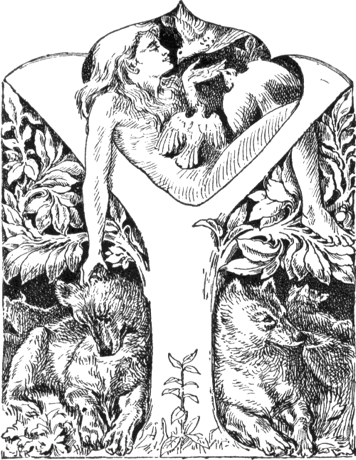


But his beloved character, Mowgli, raised outside the culture of his parents, is a larger-than-life Third Culture Kid


Kim, on the other hand, is Anglo. A fact that opens the book and is never forgotten, despite Kim being dirty, living mainly with native Indians, and speaking the language of the boys in the street better than his own. Kim is given special access to a variety of usually secret experiences, because he is “little friend to all the world” (Baucom 86). In our words, he has some kind of status that allows him to belong to many cultures, as a mascot more so than a participant. Kim sees through and uses the mutability of rules in the fashion of the most self conscious of cross-culture kids.

Kim makes for an excellent hero of ambiguous identity. Kim not only speaks but also thinks, in both Punjabi and English, and never has to chose just language or loyalty. Much to the chagrin of readers who crave resolution to internal conflict, the Kim never chooses to even think about how his multiple identities might conflict. I wish Kipling and many of us could have it as easy. Kim cycles through names too, being known as “R17” “Beloved”, and “Little friend of all the world” (Baucom 86). Kipling seems to use Kim as an outlet to explore his own TCK characteristics without fear of repercussions.

While this does not alone mean a definite end to the argument about colonists inclusion in the term “TCK,” it does mean there is enough Third Culture in Kipling’s writing for Third Culture Kids to identify with and experiences from which we can learn.


As has been mentioned briefly on Prof. Rauwerda’s blog before, colonial-era literature has a dearth of respect for host cultures. Empathy and general decency can sometimes be a far cry from what we want our children to be learning. I feel that the persistence of similar power dynamics into our age warrants exploring the literature of the time and talking with one’s children about it. The psychological distance provided by knowing colonialism is another person’s life makes for a safe fantasy land for young children to learn about real evil and prejudice, before they discover it for themselves. Talking openly about colonialism and its persistence into our lives is often necessary for processing a life of friendships that can be abruptly divided by color, language, wealth, or political loyalty. I am currently stumbling across some sources that suggest the evil of colonialism comes in part from love of one’s childhood abroad, and fear of losing that land. Talk about how love becomes bad when combined with greed and acquiescence to violent political structures. Perhaps the conversation will help them grow.

Ultimately, I think we can benefit from a TCK identity that embraces travelers of the past. After all, Muhammed grew up in three different families, and Kipling had his share of identity crises.
With enough context to justify one’s experiences, and enough sense of community to never feel alone, we can look forward to a time when we don’t cringe at being asked where we’re from. We’ll proudly answer “A global family of culturally hyperconscious serial migrants.”
At least it’ll get a chuckle at dinner parties.

Please Reply with stories, songs, poem, or movies that you think help kids understand that there is a romance to being adrift, and a family of drifters who understand.


Works Cited
Baucom, Ian. Out of Place: Englishness, Empire, and the Locations of Identity. Princeton, NJ: Princeton UP, 1999. Print.
Collier, John. Rudyard Kipling. Digital image. Rudyard Kipling. Wikimedia Commons, 8 Apr. 2014. Web. 23 Apr. 2015. <http://commons.wikimedia.org/wiki/File:Collier_1891_rudyard-kipling.jpg>

Couto, Maria. "Rudyard Kipling." A History of Indian Literature in English. Ed. Arvind Krishna Mehrotra. New York: Columbia UP, 2003. 70-81. Print.
(1)Kipling, J. L. Mowgli 1895 Illustration. Digital image. Mowgli. Wikimedia Commons, 24 Feb. 2007. Web. 23 Apr. 2015. <http://commons.wikimedia.org/wiki/File:Mowgli-1895-illustration.png>.
Kutzer, M. Daphne. Empire's Children: Empire and Imperialism in Classic British Children's Books. New York: Garland Pub., 2000. Print.

Rauwerda, Antje M. The Writer and the Overseas Childhood: The Third Culture Literature of Kingsolver, McEwan and Others. Jefferson, NC: McFarland, 2012. Print.
Sullivan, Zohreh T. Narratives of Empire: The Fictions of Rudyard Kipling. Cambridge: Cambridge UP, 1993. Print.

Wednesday, March 2, 2016

A Postcolonial Studies Conference, and the Rising Literary Profile of Third Culture Kids

I had to make some tough choices this year: budgets (academic, personal) get trimmed and trimmed and time (work, children) gets tighter and tighter.

I could only afford to go to ONE conference this year, and it was going to have to be Stateside. 

This forced me to do something I need and want to do, but often find difficult:
talk to literature scholars (who have generally never heard of TCKs before) about TCKs , as opposed to talking to TCKs about literature for organizations like FIGT (everyone there has at least heard of literature). 

This has, in the past, been a bit like sales: "Please buy this concept!  I swear to god, I did not make it up!  Look, here are dozens of Psych folks who do work on this.  Third Culture Literature is a thing.  It is!  Really." (*audience of literary critics with PhDs look distractedly at their doodles and phones, absorbing little of my urgency*)

I was fortunate to have a paper accepted by the British Commonwealth and Postcolonial Studies Conference in Savannah, GA.  And I went, happily, with my Third Culture Literature pitch and argument about third culture novelist DBC Pierre's multiple points of view.

Well, first, Savannah was lovely!  All of those verdant garden squares and cobbles.  All of the spanish moss.  All of the SCAD (Savannah College of Art and Design) buildings!  Just lovely.

And second, the keynote speaker did the hardest part of my work for me.

Edwidge Daniticat spoke the evening before my paper, to a large group of literary scholars.  She climbed the podium, leaned into the microphone and said "The title of my talk (I had to write something down because I couldn't memorize it all) is James Baldwin, Refugees and My Third Culture Kids."

(*Antje, still weebly from the overnight train jerks upright and has a full on "OMG did she just say that??" gawp *)

Danticat did say it, and she did mean it too.  And after her talk I skipped through Forsyth Park, elated that "third culture kids" is mainstreaming as a concept.   Someone else said those words, and didn't add a sales pitch.  She just assumed we saw that Third Culture is a thing, and a Thing with literary implications, connections and contexts.

Hallelujah!

Thursday, January 28, 2016

(Almost Entirely) a Third Culture Literature Seminar

Despite the big snow storm (Jonas!) and the kids being out of school, I am enjoying a quiet hour at work (Mmmmm: work!) getting ready for class.

The title of my 300 level seminar "Overseas: When World Travelers Write" is meant to tantalize and appeal to students at my college, where study abroad is mandatory.  It conceals the fact that the course is pretty much a third culture literature seminar (barring Saro-Wiwa,  and MIA,  who are not really TCKs but are perhaps more "immigrants" in the fine splicing and dicing of terminology).

Check out my blurb:


Course Description:

This course examines different kinds of writing about being “overseas.” We start by examining a non-fiction travel narrative (Noo Saro-Wiwa’s Looking for Transwonderland).  Then we consider two memoirs, the first by Canadian/American/ Zimbabwean Alexandra Fuller (Don’t Let’s Go to the Dogs Tonight), the second by Sri Lankan/ British/ Canadian Michael Ondaatje (Running in the Family).  Michael Ondaatje is, among other things, a third culture author (one raised as an expatriate outside his passport home).  His memoir leads us in to a consideration of what third culture is and from there to fiction by other third culture authors (Joseph O’Neill’s The Dog, Barbara Kingsolver’s The Poisonwood Bible and Ian McEwan’s The Cement Garden).   We conclude the course with a satirical, futuristic novel about Islam in France by another third culture author, Michel Houellebecq’s Submission.

My strategy is: get them in the room, and then teach them about TCKs.  Usually part way through the course some students start revealing themselves as TCKs, or start saying things like "ooooh.  I had a friend who . . . and she was  . . . "

Last semester was a writing-course intensive one for me, as you may have noticed from the dearth of blog posts.  I am so excited to be back in the world of world literature.  In a freshman course I get to teach, among other things, TCK Jane Alison's Natives and Exotics.  I also get to go to the British Commonwealth and Postcolonial Studies Conference in Savannah in February to talk about DBC Pierre as a TCK.

Happy new year to you, and to me!  Expect this blog to see more action in the upcoming months.

PS  a helpful reader (Elizabeth Liang of the solo show Alien Citizen) suggested I look at a course called "Growing up Global" taught by Wendy Belcher.  Belcher's course is fantastic, and the description is replete with TCK offerings.  Find it here.

Wednesday, August 12, 2015

We Are Cumulus: Third Culture as a Cloud


I have had a bit of an epiphany recently regarding visualizing, defining and explaining "third culture."

It begins with the useful venn diagram designed by Ruth Van Reken, republished (with David Pollock) in Third Culture Kids (14).


In my head, this was supplemented by some theory on borderlands (eg the border between the US and Mexico), on transnationalism (about crossing borders) and about "interstices" or places between . . .

I began to understand more clearly the distinction between geographically emplaced culture and culture produced by the specific geographic displacement experienced by TCKs (which is characterized by  mobility and competing national/ cultural influences during the developmental years, paired with an expectation of repatriation upon reaching adulthood).

In some senses all three circles in Van Reken's diagram are territorial: they are like very simplified country outlines on a map.  One can see the image as, almost: Home Country, Host Country (Countries) and a Third "Country" ("Country" in scare quotes because the issue is that third culture doesn't have a specific country).

Third culture is cultural, as the term suggests.  While the first and second cultures imply place and geography as well as culture, third culture implies culture detached from a specific location.  We TCKs can share a culture because our similar experiences are about deterritorialization, not about terroir.

Naomi Hattaway's triangle is a useful addition, for it is about cultural transformation: circle country encounters square country and the result is a triangle (I oversimplify: she explains beautifully, with diagrams).  Significantly her paradigm, like Van Reken's, gives us this equation: "country one + country two = third culture."  Place plus place = something that happens that doesn't have a specific geographic location.

My epiphany is this: what if Van Reken's venn diagram is rendered three dimensionally?  Home country is a place on ground level, host countries are places on ground level and third culture is represented as floating above, like a cumulus cloud?

The venn diagram might look like two circles ( First Culture, Second Cultures) with a cloud floating above them  (Deterritorialized Third Culture).


Yeah, OK.  That looks kind of goofy, I know.  Graphic design: not my forte.

Still, I think there's something really important  to conceptualize here.  We all already know that third culture doesn't have a single location, but our diagrams perpetuate/create a third space on the terrestrial level, when it might be more apt to create a third space that floats.

Why does the floating cloud work so well?

Well, it can drift.  Sometimes it's more over Home, sometimes more over another place or places.

Also, it makes clear that, like cumulus clouds, TCKness is both substantial and disparate.  It is shape-changing and transmogrifying, and yet it also, paradoxically, coheres, just like clouds do.

And, for those of us wrangling with the troubling parallels between TCK and "expatriate" (increasingly synonymous with neo-colonial privilege, especially in the British media) here's something else that the cloud illustrates: TCKs do tend to have the option of being detached from the politics of their host countries.  Their passports, visas and parents' careers give them the freedom to leave and drift away.  We don't have to take that option: TCKs can be politically engaged and responsible . . . but it is worth noting that we often have the privilege of being able to choose to leave if the going gets tough.  For better or worse, we float, like clouds.