shelves

shelves

Friday, February 5, 2021

Shame: The Next Frontier in Third Culture Studies

 I was recently at Transnational Literature's "Follow the Sun" Conference.  I was on a Third Culture panel (organized by Jessica Sanfilippo Schulz) with Jessica, and with Anastasia Goana (the dream team: we have paneled together before.  I hope we get to again).  "At" of course means "on zoom".  Look!  Here we are (Anastasia for the photo credit):


Zoom notwithstanding, the conference did what conferences are--at their best--supposed to do.  It stimulated thought/ exposed me to new ideas/ made me want to weep gratefully that other people out there in the world think that some of these issues are interesting too.

 I gave a paper on Third Culture and how it could function as a kind of nationality (nods to Benedict Anderson and Joanna Yoshi Grote, as well as Danau Tanu's work, which got me thinking along these lines in the first place).  I went on a bit of a tear about academia and methodological nationalism within our disciplines (which tend to be defined in terms of nation and so, even if our institutions like the hipness of "transnational" and boundary-crossing terms, these same organizations that fund our research and employment are stubbornly resistant to them). And . . . I wrapped up with some consideration of privilege, the problem of relegating host countries to mere backdrops, and shame.

Bambo Soyinka, who is sharp and articulate, and a pleasure to spend time thinking with, said of our panel as a whole that the issues of shame, denial and privilege kept surfacing.  Did they always have negative connotations, Bambo asked.

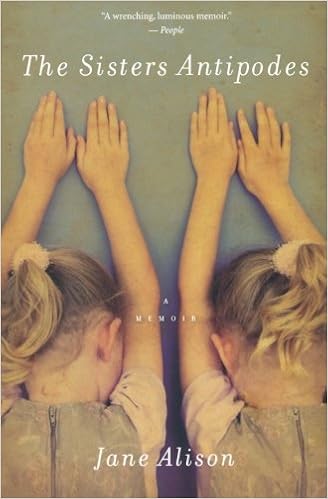
My answer was no.  In fact, I think turning to look those issues in the face is precisely where positive insights will emerge.  I want to write more about this.  I am, vaguely, beginning to cook a piece that deals with Jane Alison's The Sisters Antipodes and Sisonke Msimang's Always Another Country and the question of adult perspectives on a childhoods of comparative privilege.

In what I have so far on the question of shame, in a longer-playing article on TC Nationalism that I can't seem to get published, I quote Tanu's interview of an adult TCK dubbed "Afra"who grew up in Algeria.  That adult says of their childhood during times of political unrest, "I miss the riots."  Tanu notes that "some TCKs speak of developing countries as though their poor economic conditions or sociopolitical unrest were like adventure rides."  Oof, right?  At first, that TCK interviewee sounds like a bit of a jerk, except that what they really said had a specific intonation: "'I miss the riots,' said Afra, 'with knowing humor.'"  

Stop the train: that "knowing humor" changes everything.  'Afra" misses the riots (they miss their childhood home and its conditions), but Afra knows it is ridiculous, crazy, wrong, privileged, shameful, to say such a thing.

My contention is that the adult perspective on privileged childhood experience is something TCK scholars absolutely HAVE to deal with.  Here (from the article I haven't yet published), is why I think so:

What do you think?  Jessica Sanfilippo Schulz (who is quite the power-house in third culture literary work these days) wrote this to me in an email:

 By the way, regarding the comment about shame/guilt of last week, it is a recurrent theme in the four texts I have analysed (PhD thesis). As you illustrated, it is something that seems to occur retrospectively in adulthood. My first four chapters examine life writing written in adulthood and shame and guilt is always there, TCKs and refugees. BUT: in chapter 5 I explore life writing written by youth, and so far, I haven't come across shame and guilt much. Just at the beginning of one Vlog entry I am looking at and I am currently wondering how to tackle it / label it / explain it. I am writing the final chapter right now and will keep an eye on this theme. Another thing that I have noticed is that shame and guilt (so far the texts I have read) are only noticeable in texts by women. I haven't come across it in any of the other texts I have read by men. I therefore think that when it comes to looking at Jane Alison, you might want to compare the text with a memoir written by a man. 

My response, over email:

I have just had time to read this.   Goodness.  My jaw is on the floor.  There is my hunch . . . And then you go and back it up with a bevy of actual facts!  Hmn.  Well.  Seems like there is work to do.  I really like your idea of comparing a M and F memoirist. 

I like your blog idea too.  If I do one, would it be OK with you if I cut and pasted a few of your words from below?

So, Jessica: here is the blog post you requested :)

PS to everyone.  Do you think we will ever get past defining "third culture"?  I think literary terminology should provide us with useful tools, and TC has been useful to me . . . I confess, however, that I am tired of defining it, patrolling its borders, trying to make it cohere.  Jessica's conference paper branches out more into cross-culture, and Aminatta Forna spoke eloquently in her keynote at the conference about the transnational. . .

Comments welcome.


Thursday, June 20, 2019

How did "Postcolonial" do it? On "Third Culture" as an identifying category.


The college at which I teach is not unusual in imagining courses in American Literature, which cover literary texts by "Americans" of various kinds from various eras (contemporary, Black, Queer, Historical), and in British Literature, which likewise teaches texts by "British" authors of various kinds from various eras.  This requires faith in "American" and "British" as legitimate identities.

My college, like many, also offers courses in Postcolonial Literature.

If logic follows, one should be able to argue that "Postcolonial" is a legitimate identity.  Certainly it is a legitimate category for academic analysis.  The term is vexed with critique and the notion of "postcolonial" spans multiple continents. Yet, postcolonial literature, right or wrong, flawed or no, is a viable, and identity-based subject area.  Postcolonial texts are designated according to the biography of their author.

I point this out because I wonder how theoretical writings by authors like Spivak, Bhabha and Said-- reflecting on resistance to colonialism--facilitated a Eurocentric, homogenising discipline in which all formerly colonised nations are lumped together as objects of study in Western Scholarship (I believe Chandra Talpade Mohanty writes about this in her 1986 "Under Western Eyes").

On the one hand: OMG epic problem in which academia perpetuates a "There's the West and the Rest" binary (See Niall Ferguson, 2011).
On the other: Hmn.  Strategic Essentialism, anyone?

In "Subaltern Studies: Deconstructing Historiography" Spivak argues for “a strategic use of positivist essentialism in a scrupulously visible political interest” (pg?).  According to Oxford Reference strategic essentialism is "A political tactic employed by a minority group acting on the basis of a shared identity in the public arena in the interests of unity during a struggle for equal rights. The term was coined by Spivak and has been influential in feminism, queer theory, and postcolonial theory." 

An interpretation of "postcolonial" is that its essentialism is strategic: at least it exists in the Western Academy. Flawed, and homogenizing as the term is, students at least get to take the courses (and in them, or in my versions of them at any rate, historical, national and cultural distinctions are carefully drawn and contexts painstakingly taught).  

Enter Third Culture Kids, and Third Culture Authors:

Does everyone critique the terms over and over again?  Yes (as in postcolonial studies).

But do we still use TCK?  Yes, because it is gaining some traction/recognition (as was the case for postcolonialism which gained traction in the 1980s)

Is there a single nation of origin for "Third Culture"?  No (as in postcolonial)

Is a literary-analytical model predicated on author biography a problem?  Goodness yes!  Did Foucault not argue that the author is dead?  (And yet, all our literary disciplines are predicated on a myth of origins: American, British, Postcolonial . . . why shouldn't third culture be added to that list?)

Here's my thought: strategic essentialism is "scrupulously visible", in other words, it has an objective in mind and declares, openly, the short-term elision of nuance in order to achieve that goal.

TCK is "gaining traction": but only a little. 
Any one of you who has recently had a piece of academic work rejected by a journal that has no idea what you are talking about, and/or has had to rehearse ad infinitum a definition of third culture in order to educate your audiences or potential readers, knows there's a long way to go before this term is understood in academe.

Strategically: let's use the term even though it essentializes.  While we do so we can point out its flaws and nuances (as was done in the postcolonial studies of the 1980s and 1990s).

Goal: to be acknowledged as a "thing" in academia?

What is our "goal"?

Wednesday, June 5, 2019

Jane Alison, Co-Ordinates, Return


In The Sisters Antipodes, TCA (Third Culture Author) Jane Alison writes "Sometimes I think we all have embedded in the brain a personal space like a home we've lost that lingers in our skulls"(5). I wonder.  Do we?

It's been a long three years for me in which I have not worked much on matters third culture.  I have been engaged instead in the unraveling of my parents's lives 3,000 miles away, the sale of their house, the death of my father, and my mother's transition to a nursing home.  To distract myself from all that, I wrote a novel and have thus joined the ranks of professors with unpublished novels in their desk drawers.  That manuscript has a plot absolutely rooted in the place in which I currently live.  Everything happens within a mile of here, where I sit typing this morning.  I was also department chair, and then program chair, during a time of radical restructuring at the college at which I work.  As my program's faculty dwindled, I was called upon to teach more historical literature than ever before.  Last year, I taught no international fiction courses, but did teach, among other things, Beowulf, The Canterbury Tales and The Inferno.  I like all that other literature too, but: Who am I?  Where am I?

This spring, in order to have the same citizenships as my children, I became an American citizen. At the citizenship ceremony, I cried when I sang the American anthem because what came out was my British schoolgirl voice, the accent of Welsh-Catholic hymn singing back when I was 14: Who am I?  Where am I?

Last week I bought a house, also within a mile of where I sit now, typing.  The mortgage broker gave me a present, a framed canvas with a map of Maryland and the words "Rauwerda  Home  est'd 2019" at the top, with the house's specific co-ordinates forming a banner across the bottom.

There is no more TCK issue than "Where are you from" and no more fraught topic for TCKs or really any adult trying to anchor their identity in the ever-shifting world than "where is home?"

Here I am, then.  I have specific co-ordinates and a return to The Questions.

Over the summer I have funding to write an article about whether third culture identity can be viewed as a kind of nationalism.

In the fall I get to teach a course on contemporary international fiction and one on transnationalism.

I will dig back into this blog too.  What to do with the bloated and unusable but impressively capacious list of authors, for instance?

Reading The Sisters Antipodes  this morning, I notice that in 1965 Jane Alison "traveled by train to San Francisco, where [she] boarded the Oronsay" (17).  What a fantastic co-incidence, for this is the same ship Michael Ondaatje writes of in The Cat's Table and indeed the same ship Ondaatje himself travelled upon in his 1954 journey from Ceylon to London!  (Additional discovery thanks to Wikipedia, is that the Oronsay featured in a 1958 British Comedy called The Captain's Table: clearly Ondaatje's The Cat's Table is riffing on that).

Inhale, exhale, welcome home.


Friday, April 13, 2018

Explosive diaspora: second generation TCK-ness (a personal rather than academic post)

I had an email from my uncle today.
That's an odd thing because I am not sure I have ever met him, and if I ever did it was at least 30 years ago.

My father was Dutch, born in Indonesia in the 1930s. Also born in Indonesia in the 1930s were his older brother, a sister, and another brother.  This cohort of siblings all spent years in Japanese prisoner of war camp and remarkably (good genes!) all survived.  The youngest brother, the one who wrote me today, was born in the mid-1940s (possibly in Ethiopia, possibly in Holland: I am not sure). 

The diasporic spread of my father's generation is huge:
My father went from prison camp to years lived in Holland, Belgium, Nigeria, Canada, Wales, Canada, Singapore, Ghana, Canada.
The oldest sibling lived in Belgium.
The sister lives in Italy.
The younger brother in his cohort lived in Namibia.
The  youngest, the one who wrote me, lived in Hong Kong and is now, I think, in Holland.

The youngest wrote me (East Coast USA) to ask for my mother's address (West Coast Canada), observing of his own disconnection from his much older siblings: "our family lived all in a different part of this world and a visit around the corner was not so easy."

Not so easy indeed.  It was nice to hear from my uncle.  Despite years and geography, he writes just like my father used to.  Is that in the genes also?

Friday, October 20, 2017

Responding to Danau Tanu

Danau Tanu has an essay called "Toward an Interdisciplinary Analysis of the Diversity of 'Third Culture Kids'" in Migration, Diversity and Education: Beyond Third Culture Kids (eds. Saija Benjamin and Fred Dervin, Palgrave 2015).


I love this collection as a whole for moving the rhetoric of third culture into academic discourse.  In the spirit of academic discourse, Tanu's comments on the applicability of "third culture" as an analytical rubric are quite critical: I love this too.  We must be able to scrutinize all angles of our approaches.

Someday, I might do something more elegant (and academic) with my responses, but for today I would like to "converse" somewhat chattily with Tanu's article:

DT (13): the concept is difficult to apply across disciplines for two reasons.  First, it is premised on essentialist categories that reify the boundaries, which define "Third Culture Kids." Second the (Anglophone) literature has hitherto overlooked the significance of the specific socio-cultural context within which the term [. . .] was coined and subsequently popularized.

AMR (ie, Me): 1) So is everything, at least when it comes to disciplinary definitions within academic departments: American Literature?  Reified boundaries.  British?  Black British?  Immigrant British? etc etc.
and
2) That is changing!  See especially Jessica Sanfilippo Schulz's important work treating third culture literary texts that are not Anglophone.


DT (14):  TCK is "better understood as an emotionally powerful insider (emic) construct that narrates identity and belonging for people with a transnational upbringing in the same way that "Italy" or "Indonesia" represent geographical and emotional homelands, but are insufficient as analytical constructs."

AMR: Yes!  For those without a specific nation or geography to emplace them TCKness does become a paradoxical "nationality", it becomes a "homeland."

Here's a thing that fascinates me: if "TCK" is analogous to "Italy" or "Indonesia", then, in spite of its insufficiencies as an analytical construct, it can be used the same way.  We study "Italian Literature"; we study "Indonesian Literature"; therefore we can also study "Third Culture Literature" and assume that this title implies some level of cultural coherence.  Tanu's discussion reveals how wrong headed all frames of analysis based on nation really are ("Italy" and "Indonesia" are much more diverse than those essentialist labels imply).  If we persist in using "Italy" and "Indonesia" as analytical constructs, I would argue, "TCK" can analogously join their ranks.


DT (18): "Instead of the processes involved in negotiating boundaries [TCK scholars] emphasize the content."
AMR: Tanu is saying, I think: there is too much work defining who is TCK and figuring out how to delineate the term, and it comes at the expense of thinking what the term is comprised of.  There is too much emphasis on describing the box at the expense of observing what is IN the box.
YES.  Dr. Tanu!  You are quite right.

What is IN THE BOX of third culture literature? Obviously (go ahead, scroll through the blog, or browse my first book Overseas), I have gone at this problem before.  In these early efforts I started with explaining TCK, and defining who is a TCA and agonizing over biographies (all problems in the field, as Tanu argues).

CAN one go the other way?  Can one start with "what is in the literature (that makes it TCK)?"  I hope so.  I'd like to try that next.

My commitment, as always, is to the "un-national".

Can one look in the box first, and leave commenting on author identity out altogether?  Or at least make it secondary?  It is, I would emphasize, NOT the norm in literary critical studies, a discipline which pretends a la Foucault that the author has died, and yet continues to orient all of its courses around national identities and many of its professional publications around them too. (Anyone got a copy of Canadian Literature kicking around?)

(Maybe TCK (or the un-nation of its authors) must strategically essentialize to prove their nationhood first?
Maybe we have already done that?)

Maybe we can be the first , us in the world of literary critique, to look inside the box and see what is there waiting for us, the Schroedinger's cat of what happens in un-nationalist fictional narrative?


Monday, September 25, 2017

Postcolonial Studies Association, London, 2017

This is a bit of a conference digest.  First: reflections on third culture and its literature; second reflections on Dulwich college and ships (related, I swear) and third (unrelated, except to my life in a Humanities Center here at Goucher College) Rosi Braidotti's keynote.

First:
Oh, I was as happy as a clam in the session on Third Culture.  Photo credits Anastasia Goana Go Ying Ying.


Anastasia Goana  Go Ying Ying (middle) presented Sociological material on TCKs and superdiversity (Vertovec), on identity denial (in which one can curtain/screen off parts of one's identity selectively and to situational advantage) and "enoughness" (when is one of a place "enough" to claim that place's identity?).  She noted the problem of being "called out" for inconsistent self-identification.  Her accounts of interviews and surveys were succinct and vivid.

Jessica Sanfilippo Schulz (right) contrasted and compared TC and Transcultural, referencing the work of Arianna Dagnino, and analysing Allende, Messud and Baraouie (TCAs who write in languages other than English).  Her work is essential in advancing TC analysis into comparative literature.

Both of these papers were great.

My paper was about the cloud theory thing (spoken of previously on this blog).  Here I am !


The questions after the papers raised familiar issues: why this term, do we need it? asked Cathy Waegner.
I think we do . . . but it's only useful if it adds something specific not covered elsewhere: I still believe it does, though maybe the transcultural is coming awfully close.

Isn't this a (heinous!) biographically driven reading, asked a woman whose name I didn't record.  Yes.  It is.  Thinking about this afterwards, I think the only way round this is to indicate forcefully that third culture literature has characteristics discernible in the literature.  ie you can know TCL even if you don't know anything about the author's life. (please see my next book??)

Second:
I recently published an article on Michael Ondaatje in which I argue that Dulwich College in London, where he went to school ages 11-18, is a privileged enclave of white Britishness.  En route to dinner at an old friend's house, said friend drove us past Dulwich College and talked about how it started as a school for the underprivileged, and persists as a place that heavily recruits international students.
Hmn.  So,  It is not what I thought, at all.  Perhaps it is even more apropos though: as international school (like UWC or its ilk), Ondaatje would have been amongst other TCKs like himself.

Also Jessica had told me about Amitav Ghosh as a TCK, and she is doing great work on ships as a metaphor: I heard a wonderful paper (by Florian Stadtler) on Ghosh's trilogy (Sea of Poppies, River of Smoke, Flood of Fire): all very liquid and fluid and all that.  Stadtler argues that the national is presented as negative,  and the very specifically local as salvific.  Stadtler lifts a term from cinema: "network narrative" (David Brodwell, Poetics of Cinema, 2008 p 243) to explain fluid synchronicities.  I want to read the trilogy and return to his argument.


Third:
Braidotti on the Humanities.
OMG do we not care about analysing the human anymore?  I was recently scolded for insufficient engagement (my whole center, the Humanities Center, was, not just me).  How can we engage when the pasts of our disciplines are coming to an end and their futures aren't yet clear?  Braidotti argues that we are on the cusp of a sixth extinction environmentally and an end-point disciplinarily. Speaking for literature alone: whither the future if everyone writes and no one reads ? (pun intended).
Is literature's saving grace that it teaches empathy in a tech-heavy individualistic world?  Do we need war to bring back the importance of the human and of human stories?

Wednesday, September 6, 2017

Aufwiedersehen British Army Brats in Germany (Guest Post: Jessica Sanfilipo Schulz )


Whilst carrying out research for a scholarly article I recently wrote about TCK songwriters, I stumbled upon many musicians who grew up as military brats in Germany. A couple of weeks ago I submitted the article but since then my list of artists who, as the offspring of British Armed Forces personnel, were raised in Germany still seems to be growing. Some of the musicians, for example, are James Blunt, Pete Doherty and Colin Greenwood (Radiohead). Incidentally, Tanita Tikaram was born in Muenster, where I am currently living. When my family and I first moved to Muenster in 2003, the presence of the families of the British Armed Forces conferred this otherwise very provincial town, an aura of internationality.

Originally, the units of the British 21st Army Group arrived in Muenster in April 1945. Soon after this, when Germany was divided into zones of occupation, the British Army was assigned the north-western part of the country and more specifically the key cities of Cologne, Dortmund, Duesseldorf, Hamburg, Bremen, Kiel, Hannover, the Ruhr valley and the North Sea coast. Furthermore, the 21st Army Group was renamed “British Army of the Rhine”. The group then consisted of 80,000 soldiers. In 1955 the allied military occupation of West Germany formally ended and at the end of the sixties, 55,000 British Army soldiers were stationed in Germany. With the official unification of former East and West Germany and the signing of the Treaty on the Final Settlement with Respect to Germany, the British Government announced a framework for “Options for Change”, involving substantial cuts in the British Army of the Rhine. It was also announced that the group of units would be renamed to British Forces Germany (BFG). Finally, in 2011 the MoD make public the pull-out of the 20,000 remaining troops in Germany, which is to be accomplished by 2020.

At the end of 2012, Muenster witnessed the closing of the BFG barracks and the withdrawal from the town of 600 troops and their families. Looking back, it appears that they not only handed down barracks, housing accommodation and bi-cultural liaisons to the town of Muenster, but thinking of TCK artists such as Tanita Tikaram, it seems that some of the individuals who were linked to the BFG left their artistry behind to a wider audience.

Shelley Jones cunningly looks into the connection between creativity and nomadic childhoods. She interviews TCKs who chose creative careers in adulthood. These TCKS confirm that they began engaging in creativity in order to express their displacement.

Lance Bangs, a TCK filmmaker (an American military brat), reveals that in childhood, amidst the frequent travelling, he felt like he was going to disappear so he turned to filming as a form of keeping an anchored journal. Donna Musil, also an American military brat filmmaker, reports to Shelley Jones that creativity gives military kids a voice: “Many of these kids don’t have a voice when they’re growing up,” she says. “It’s always what the military needs, what the foreign service needs, what the missionaries need. So I guess that makes a lot of artists, because you want to express yourself.”

Thus, as Donna Musil points out, whilst growing up, many TCKs did not have a voice because they had to follow the etiquette of their parents’ employers and represent their parents’ nations in an honorable way abroad. Creativity gave a voice to many military brats, such as Ian McEwan, Tanita Tikaram and the designer Nicholas Kirkwood, who all spent part of their childhood in Germany. Now, after 70 years, the British Army troops are preparing to leave Germany permanently. Not only are the troops involved in this withdrawal but their families too. The military cuts and withdrawals evidently mean that less British Army troops and their families will be sent abroad and fewer children will be raised as British military brats. So does this step also represent the end of a generation of British military brat artists and the fascinating artistic outcome of their transient childhoods? Luckily there are many other subcategories of TCKs. Brian Molko of the rock band Placebo, for example, is a business brat, whereas the designer Tom Dixon is an EdKid (see Zilber for this term). It is therefore reassuring that there are currently still many other groups of TCKs on the move and I am looking forward to their future expressions of creativity.

by Jessica Sanfilippo Schulz


Works Cited

Jones, Shelley. “Does a Nomadic Childhood Lead to a More Creative Life? Uprooted Kids.” Huck Magazine. 22 July 2015. http://www.huckmagazine.com/art-and-culture/uprooted-kids/


Zilber, Ettie. Third Culture Kids: The Children of Educators in International Schools. Melton, Woodbridge: John Catt, 2009.